
Types of Bucket Elevators
Compare belt, chain and pendulum bucket elevators. Learn their working principles, applications and advantages to choose the right conveying solution.
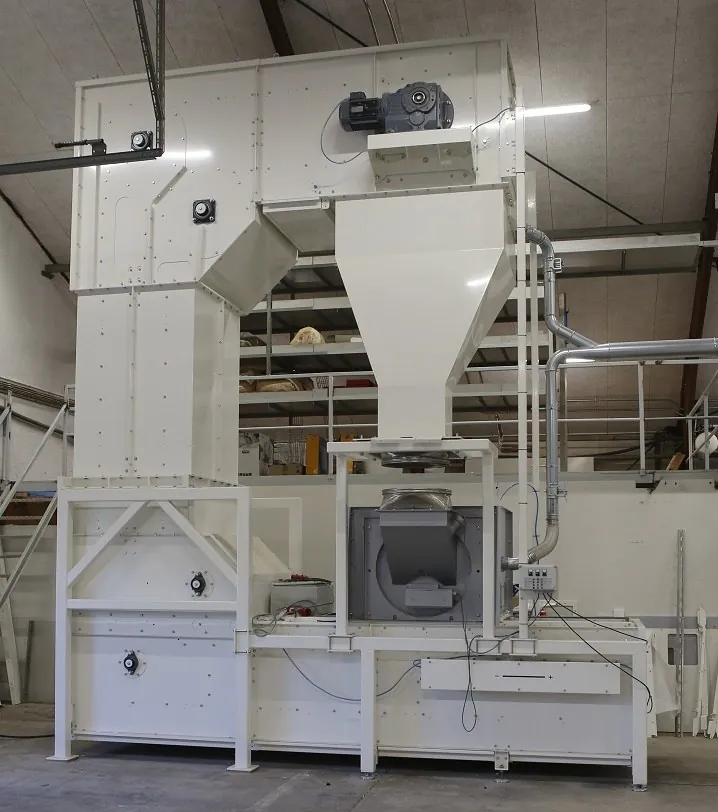
Comparing Belt, Chain and Pendulum Bucket Elevators
The term bucket elevator is often used as if it describes a single type of machine. In reality, several bucket elevator designs exist, each developed for different applications and conveying requirements.
The three most common types are:
- Belt Bucket Elevators
- Chain Bucket Elevators
- Pendulum Bucket Elevators
Selecting the right system is not only about conveying capacity. Product characteristics, plant layout, discharge points, hygiene requirements and product integrity should all be considered during the selection process.
This article compares these three elevator types, explaining their operating principles, typical applications and key advantages.
Typical Applications
Belt Bucket Elevators
Belt bucket elevators are commonly used where very high conveying capacities are required.
Typical applications include:
- Grain storage facilities
- Grain terminals
- Flour mills
- Feed mills
- Grain processing plants
Their high operating speed allows them to achieve very high capacities, making them an economical solution for handling free-flowing bulk materials.
Chain Bucket Elevators
Chain bucket elevators are designed for demanding industrial applications.
Typical applications include:
- Chemical industry
- Fertilizer plants
- Cement plants
- Mineral processing
- Abrasive materials
- Hot materials
Their robust construction makes them suitable for heavy-duty environments and continuous operation under harsh conditions.
Pendulum Bucket Elevators
Pendulum bucket elevators are designed for applications where product protection is more important than maximum conveying capacity.
Typical applications include:
- Pet food
- Aquafeed
- Extruded feed
- Coffee
- Nuts
- Breakfast cereals
- Pasta
- Seeds
- Other fragile food products
Regardless of industry, pendulum elevators are ideal whenever gentle handling is essential to preserve product quality.
Why Do Belt and Chain Bucket Elevators Achieve Higher Capacities?
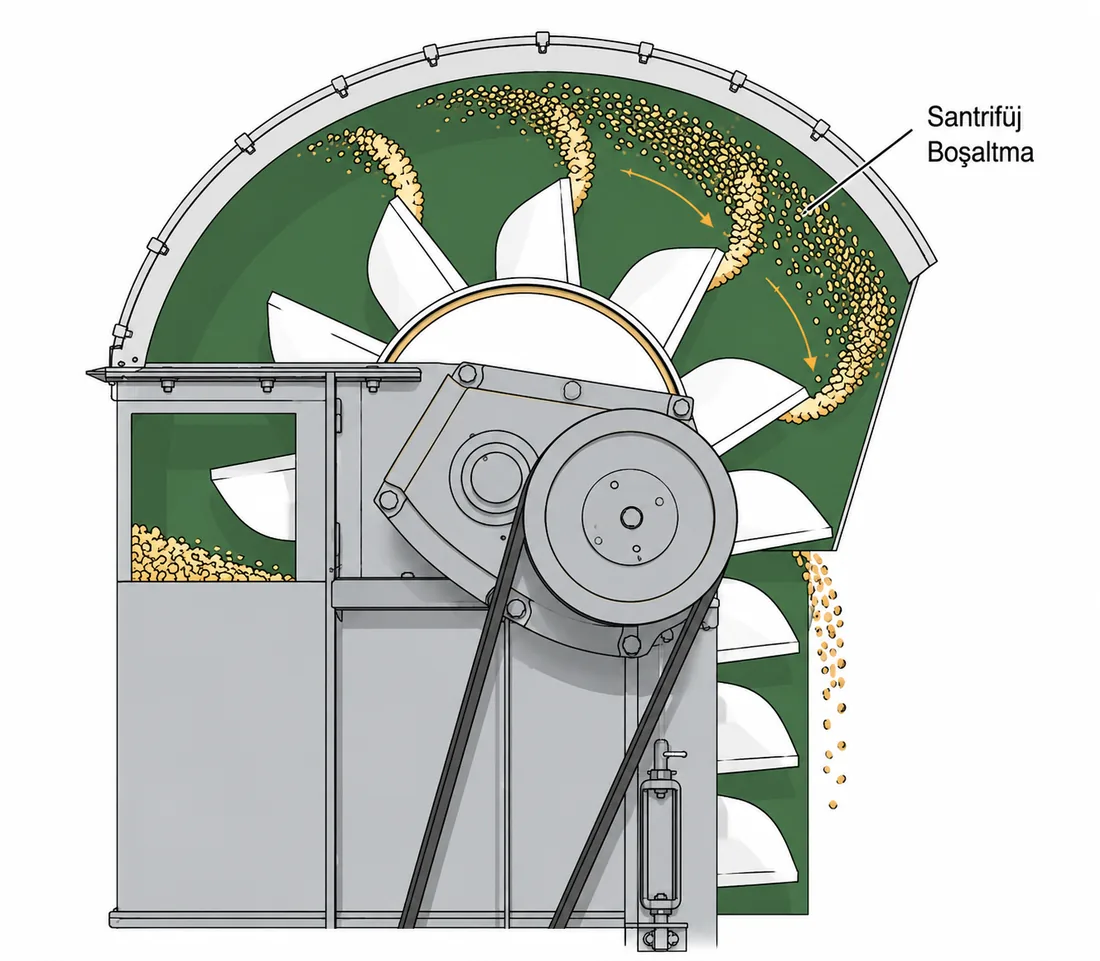
Both belt and chain bucket elevators discharge material using the centrifugal discharge principle.
As the buckets pass around the head pulley or sprocket at high speed, centrifugal force throws the product out of the bucket.
For this reason, these elevators must operate above a certain belt or chain speed. If the speed becomes too low, complete bucket discharge cannot be achieved.
This operating principle enables very high conveying capacities but may increase mechanical stress on fragile products.
How Does a Pendulum Bucket Elevator Work?
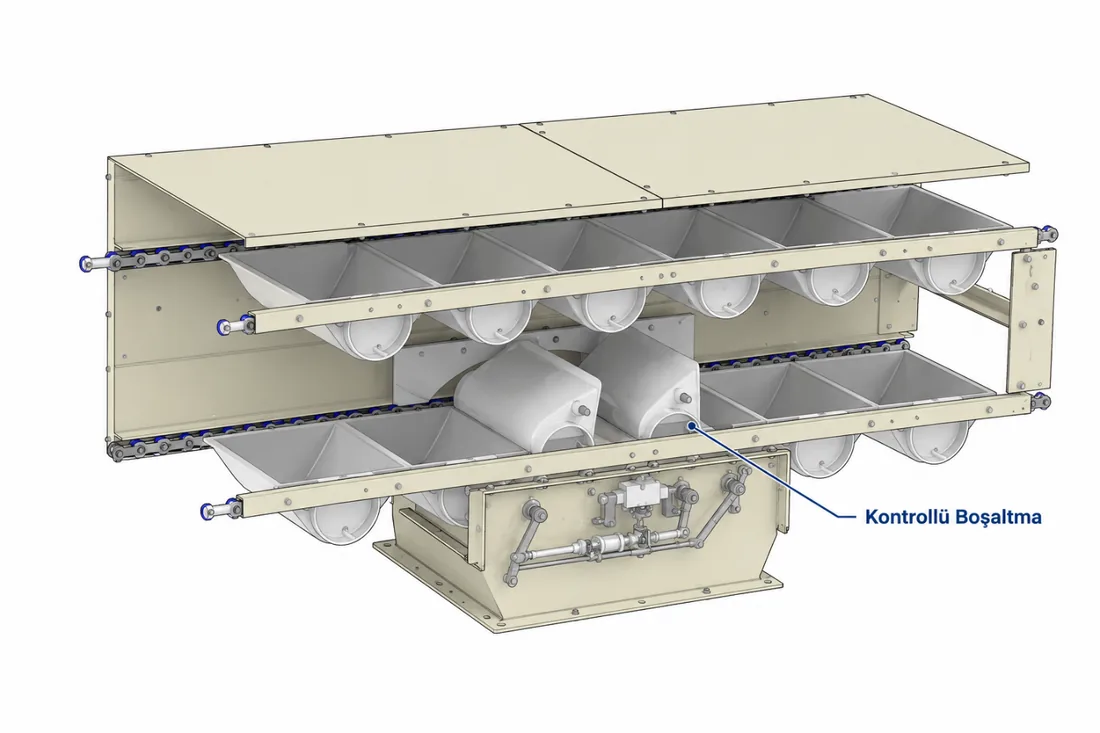
A pendulum bucket elevator operates on a completely different principle.
The buckets are freely suspended rather than rigidly fixed to the chain. Throughout conveying, they remain in a stable position and are discharged by controlled tipping at the selected outlet.
This provides several advantages:
- Lower conveying speed
- Controlled product discharge
- No centrifugal throwing action
- Gentle handling of fragile products
- Reduced product breakage and dust formation
Multiple Discharge Points
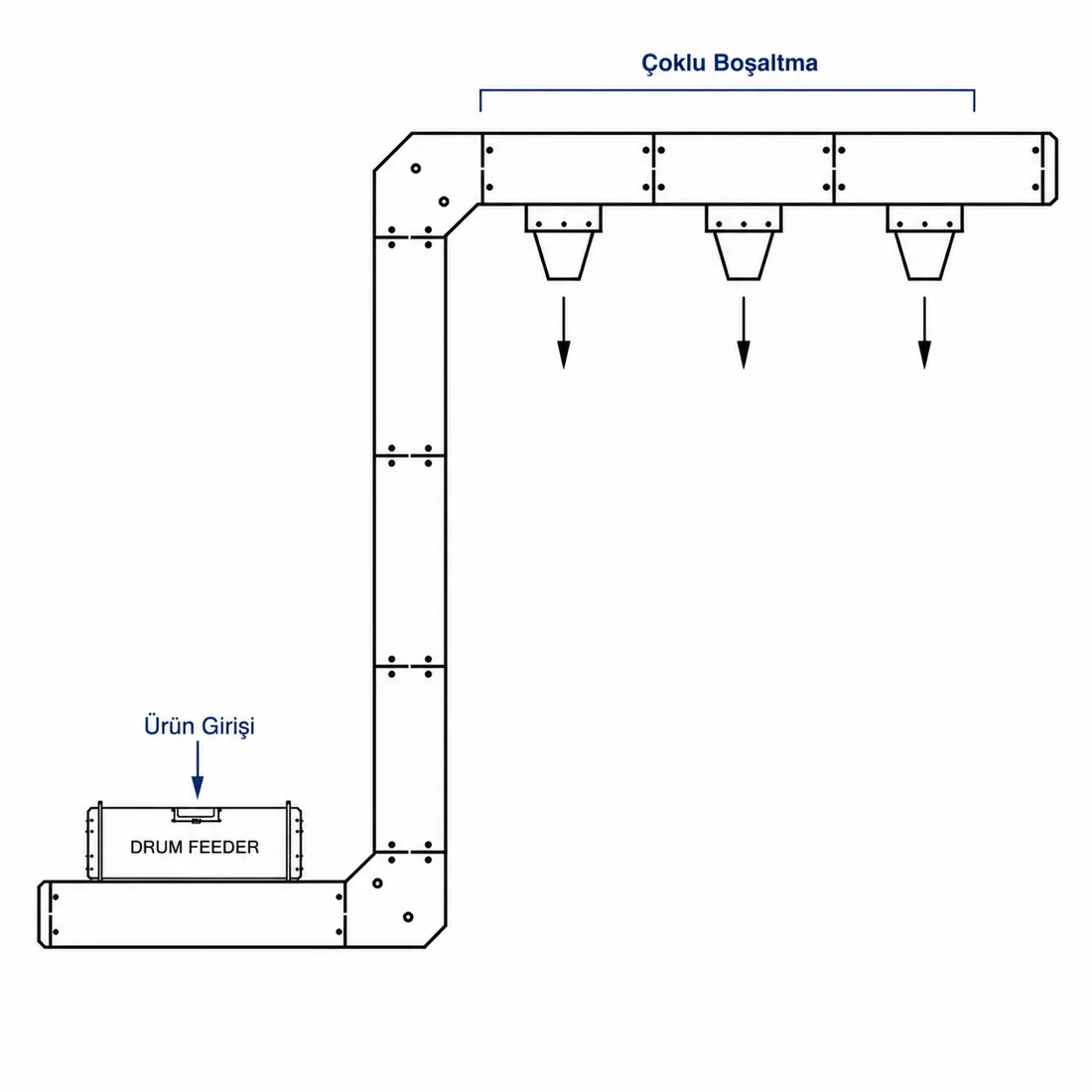
One of the key advantages of pendulum bucket elevators is the ability to discharge products at multiple locations using a single elevator.
Depending on the system design, products can be directed to:
- Different silos
- Multiple production lines
- Various processing equipment
This flexibility can simplify plant layouts while reducing the need for additional conveyors and transfer points.
Capacity or Product Quality?
Selecting the right bucket elevator requires balancing capacity with product protection.
Important questions include:
- Is the product fragile?
- Must the coating or surface remain intact?
- Is dust generation critical?
- Are multiple discharge points required?
- What are the hygiene requirements?
- What conveying capacity is needed?
If maximum throughput is the primary objective, belt or chain bucket elevators are often the preferred solution.
However, when minimizing product damage, preserving quality and providing flexible discharge options are priorities, pendulum bucket elevators offer significant advantages.
Conclusion
Belt, chain and pendulum bucket elevators are not competing technologies — they are engineering solutions developed for different applications.
Belt and chain elevators excel in high-capacity conveying, while pendulum elevators focus on gentle handling, product protection and flexible plant design.
Choosing the right solution requires evaluating both the process requirements and the characteristics of the material being conveyed.
Explore our pendulum bucket elevators →
To determine the right conveying system for your product, get in touch — our engineering team will prepare a solution tailored to your project.